In today's global market, understanding various machine printing techniques is essential. Machine printing has evolved significantly, catering to diverse industries. This article explores the top 10 printing techniques, shedding light on their advantages and applications.
Machine printing can transform materials and enhance branding efforts. Each technique offers unique benefits, such as speed, quality, and cost-effectiveness. However, not every method suits every need. Buyers must assess their specific requirements carefully. Additionally, recognizing the limits of each technique helps in making better choices.
As we delve into these machine printing techniques, we acknowledge potential challenges. Some methods may lead to wastage or require expertise. Finding the right balance between quality and efficiency remains crucial. Ultimately, informed decisions can optimize printing processes for businesses worldwide.
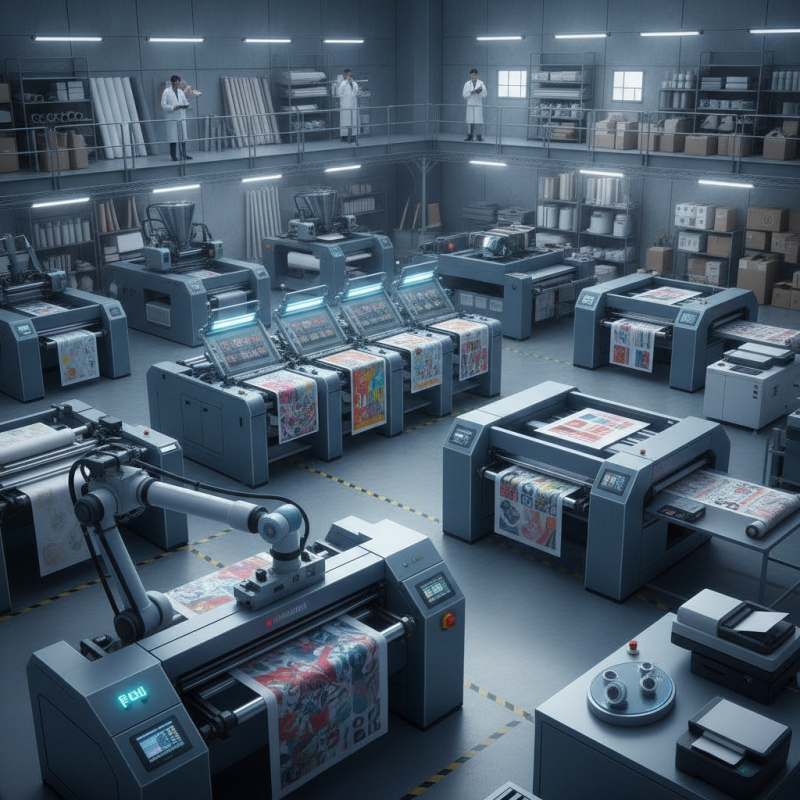
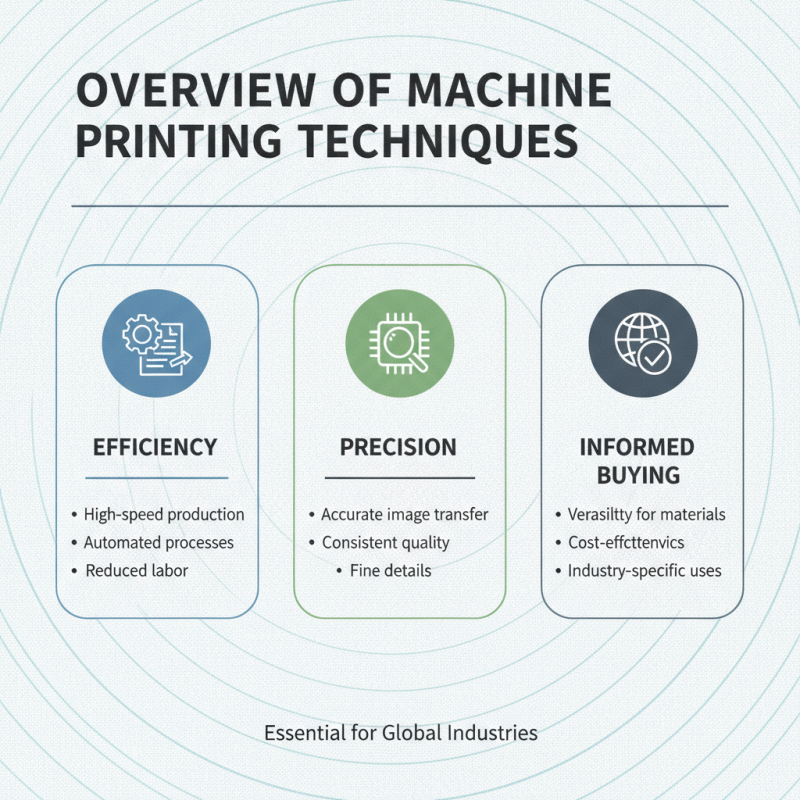
Machine printing techniques are essential for various industries. They offer efficiency and precision in transferring images or text onto surfaces. Understanding these techniques can help global buyers make informed decisions when selecting printing methods.
Digital printing is increasingly popular due to its quick turnarounds and cost-effectiveness. It allows for short runs without the need for long setup times. However, the quality can vary based on the printer specifications and materials used. Offset printing, on the other hand, provides a high-quality finish and is ideal for larger volumes. Buyers must consider production timelines alongside quality.
Screen printing remains a go-to for vibrant colors and durability. It excels on materials like textiles and glass. Yet, it struggles with intricate designs. Flexographic printing is widely used in packaging, merging speed with versatility. Each method has strengths and limitations. Buyers should reflect on their specific needs to choose the most suitable technique.
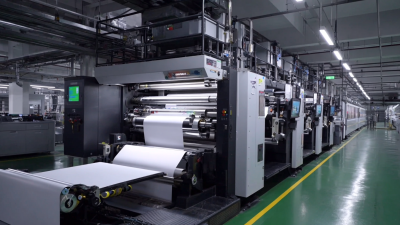
Traditional printing methods have played a significant role in the evolution of the printing industry. Techniques such as lithography, flexography, and gravure have been widely used for decades. Each method has unique characteristics, making it suitable for specific applications.
Lithography, for instance, relies on the principle of oil and water repulsion. It allows for high-quality images and is often employed in publishing. Flexography uses flexible relief plates, offering speed and efficiency for packaging. Gravure is known for its ability to produce deep, rich colors, making it ideal for high-volume work.
Despite their advantages, these traditional methods also come with challenges. Lithography can be time-consuming and requires substantial setup. Flexography’s quality can vary based on substrate choice. Gravure demands high initial costs, which may not suit every buyer. These imperfections encourage buyers to carefully assess their needs before choosing a printing method. Each technique has strengths and weaknesses, and understanding them is essential for informed decision-making in the global market.
| Printing Technique | Description | Applications | Advantages | Disadvantages |
|---|---|---|---|---|
| Offset Printing | Indirect printing technique where ink is transferred from a plate to a rubber blanket and then to the printing surface. | Books, Newspapers, Magazines | High quality, cost-effective for large volumes | High setup cost, not ideal for small runs |
| Digital Printing | Direct printing method that uses digital files and inkjet or laser printers. | Posters, Flyers, Short-run Books | Quick turnaround, flexible for small quantities | Higher cost per unit for large volumes |
| Screen Printing | A technique that uses a mesh screen to transfer ink onto a substrate. | T-shirts, Bags, Signage | Great for bold colors, durable prints | Not cost-effective for precise details, long setup time |
| Flexographic Printing | A form of rotary printing using flexible relief plates to transfer ink. | Packaging, Labels, Newspapers | High speeds, efficient for large print runs | Can produce lower quality compared to offset |
| Gravure Printing | A printing technique where the ink is etched into a cylinder and transferred to the substrate. | High-quality packaging, Magazines | Excellent print quality and detail | High cost for short runs, lengthy setup |
| Letterpress Printing | Relief printing technique where the design is raised above the surface. | Business Cards, Invitations | Unique texture and quality | Limited color options, slower process |
| Pad Printing | A printing process that uses a silicone pad to transfer ink onto a substrate. | Promotional Items, Electronics | Prints on complex surfaces | Limited to single-color applications, slower than other methods |
| 3D Printing | Additive manufacturing technology that creates objects layer by layer from a digital file. | Prototyping, Custom Parts | Customizable, great for prototyping | Material limitations, longer production times |
| Sublimation Printing | A process that uses heat to transfer dye onto materials. | Apparel, Custom Items | Vivid colors, great for synthetic materials | Limited to specific substrates, can be expensive |
| Laser Printing | A digital printing technology that uses a laser beam to produce images. | Documents, Labels | High speed, good quality for text | Color quality may vary, not ideal for large graphics |
Digital printing has revolutionized the printing industry for global buyers. Innovations in technology have enhanced the way designs are brought to life. These advancements make it easier and faster to produce high-quality printed materials.
One major advancement is the use of eco-friendly inks. These inks are safer for the environment and create vibrant colors. They reduce waste and have a lower impact on health. Many companies are exploring this option, but challenges remain. Some inks may not match the durability of traditional options.
Another notable trend is the integration of automation and artificial intelligence. Automation streamlines production processes, reducing time and labor costs. AI helps in predicting customer preferences and improving design accuracy. Yet, this reliance on technology has pitfalls. It's crucial to balance efficiency with human creativity to maintain quality. This balance is vital for staying competitive in a rapidly changing market.
In the world of machine printing, a comparative analysis of ink and material types reveals significant impacts on quality and efficiency. Different inks, such as water-based, solvent-based, and UV-cured inks, cater to various substrates. For instance, water-based inks are eco-friendly but may not adhere well to glossy finishes. According to a 2022 industry report, UV printing technology has seen a rise of 15% in popularity among buyers due to its quick-drying and vibrant colors.
Material choice is equally crucial. Substrates like paper, vinyl, and fabric require distinct inks to achieve optimal results. A major study highlighted that using the right ink for specific materials can enhance print durability by up to 30%. However, getting it wrong not only affects durability but can increase production costs significantly.
Tip: Always test ink on a sample of the substrate before full production. This can prevent costly mistakes.
Achieving the right balance between ink and material can be challenging. For example, while a specific ink may produce vibrant colors, it can also be less compatible with certain substrates. Testing combinations can be vital for ensuring the desired outcome. Regular analysis and adaptation are essential in maintaining quality and efficiency in machine printing.
Tip: Stay updated on ink and substrate innovations. Industry trends shift rapidly, and keeping informed can enhance competitive advantages.
Sustainability has become a core focus in modern printing solutions. As global buyers seek environmentally friendly options, the industry is evolving. Many companies are adopting eco-friendly inks and recyclable materials. This shift reduces waste and lessens carbon footprints.
However, sustainability is not without challenges. The supply chain for sustainable materials can be complex. Sourcing responsibly can drive up costs. Many buyers are still unaware of the trade-offs involved in choosing eco-friendly products. Transparent communication about these options is essential.
Incorporating sustainable practices often requires new technologies. Digital printing enables on-demand production, reducing excess inventory. Yet, not all businesses can afford these advancements. There is a learning curve involved, and some companies struggle to adapt. This highlights the ongoing need for support and education in the industry.