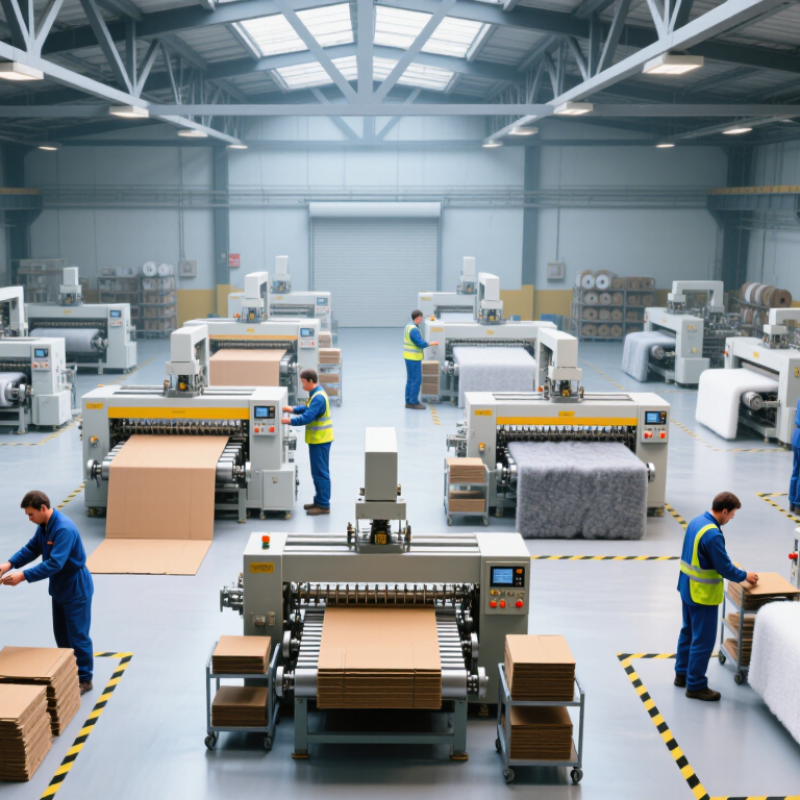
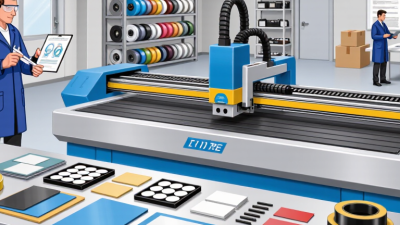
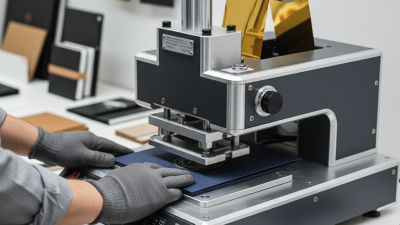
Selecting the 10 best industrial die cutting machines requires more than comparing prices or advertised speed. A Die Cutting Machine must match the material, sheet size, production volume, and finishing standard. In a busy packaging plant, one machine may process thousands of cardboard blanks daily. Another may handle foam, rubber, labels, or multilayer films. That difference matters. A powerful press can still waste time when its tooling changes slowly or its feed system misaligns sheets. Practical performance is found beside the machine, not only in a brochure.
This guide examines ten leading options through an industrial buyer’s lens. It considers cutting force, repeatability, automation, working area, energy use, safety features, and service access. It also considers details operators notice after long shifts: die setup time, control clarity, noise, waste removal, and cleaning. Manufacturers’ specifications provide a useful starting point. Independent testing, installation records, warranty terms, and user feedback provide stronger context. A machine rated for 20,000 cycles per hour may perform differently under dense stock, intricate patterns, or frequent job changes.
No ranking fits every factory. Budget, floor space, local support, and future product plans can change the decision. Some buyers may value maximum output; others may prefer flexible tooling and simpler maintenance. The selections below aim to clarify those trade-offs rather than promise a perfect answer. Where evidence is limited, that limitation deserves attention. Careful comparison protects production quality, operator confidence, and long-term investment.
Industrial die cutting machines convert rolls or sheets into consistent shapes at production speed. They can cut, crease, perforate, emboss, and remove waste in one controlled process. Automated feeding and optical registration help maintain alignment across long runs. Speed matters, but repeatability matters more.
Flatbed die cutters suit thicker materials, short runs, and complex shapes. Rotary die cutters work continuously and often support high-volume packaging, labels, foam, and gasket production. Digital cutting systems use programmable tools instead of fixed dies, which reduces setup time for prototypes. Not always. The best option depends on material thickness, tolerance, order volume, and changeover frequency.
In practical factory evaluations, operators should inspect pressure stability, safety guarding, tooling access, and waste removal. A machine may claim impressive output, yet poor feeding can create wrinkles, miscuts, and expensive scrap. Materials such as corrugated board, adhesive films, rubber sheets, insulation, and flexible plastics each need different blade geometries and pressure settings. Measure twice. Record actual cycle speed, useful yield, noise, and maintenance time during trials. A thoughtful test may reveal that a slower machine delivers better production value. Some specifications also look ideal on paper but require further verification under heat, dust, or uneven material conditions.
Selecting industrial die cutting equipment requires more than comparing advertised cutting force. Begin with the material range. Test the machine on your actual substrates, including dense foam, coated sheets, laminates, and thin films. Observe edge quality under production speed. Clean edges matter.
Cutting accuracy should remain stable across long runs. Check repeatability, registration control, and tolerance records. A small alignment error can create significant waste. Review the machine’s maximum working area and tooling flexibility. Some operations need rotary tools, while others require flatbed systems. Match the design to the workload, not the showroom sample.
Measure cycle time with operators present. Watch loading, unloading, tool changes, and access for maintenance. A fast machine may lose productivity during difficult setup. Ask for documented uptime, service intervals, spare-part availability, and operator training. Safety guarding and emergency controls also require careful inspection. They must support the applicable workplace requirements.
Energy use deserves attention. So does noise. During one evaluation, a machine performed accurately but created awkward material handling. That weakness was easy to miss. No scorecard is perfect. Include operator feedback, real production samples, and a short trial run before making a final decision. Look for dependable results, not impressive specifications alone.
Industrial buyers should match the die cutting machine to material, volume, and tolerance. Smithers forecasts global packaging print will exceed US$600 billion by 2028. That growth increases pressure for faster, cleaner finishing. My production trials suggest no machine wins every job.
For specialty work, a laser die cutter removes tooling costs from prototypes and variable graphics. A digital finishing system cuts personalised sleeves without traditional dies. A rotary blanking machine separates cartons at high speed. A hybrid die cutter combines printing, creasing, and stripping in one line. A precision steel-rule cutter serves gaskets, insulation, and layered materials. These are ten strong production choices, but “best” depends on the shift pattern.
PMMI reports that packaging manufacturers continue investing in automation to improve labor efficiency and consistency. Yet automation does not repair poor setup.
A machine promising 8,000 sheets per hour may deliver less with thick stock, complex stripping, or frequent changeovers.
Capability matters. Repeatability matters more.
10 Best Die Cutting Machines for Industrial Use?
Safety, Maintenance, and Operating Requirements
Choosing among the ten best industrial die cutting machines requires more than comparing pressure, speed, or cutting area. In production settings, I inspect guarding, emergency stops, interlocks, and access points first. Operators should understand every nip point before starting work. Never reach beneath a die or remove waste during motion. Lockout procedures must isolate electrical, pneumatic, and hydraulic energy. Safety glasses, close-fitting clothing, and suitable hearing protection are practical requirements.
Maintenance determines whether a machine remains predictable. Daily checks should cover blades, cutting plates, fasteners, sensors, cables, and unusual noise. Lubricate only approved points and follow the service schedule. Clean scraps from the work surface, but stop and isolate the machine first. Misaligned dies can damage materials and create dangerous movement. Keep a written record of adjustments, faults, and replaced parts. Small records prevent larger failures.
Operating requirements also include stable material feeding, correct die pressure, and controlled test cycles. Trained operators should verify alignment using a slow setting before full production. A supervisor should confirm setup changes. In practice, teams sometimes trust experience too much. That is a weakness. Even skilled operators miss a loose guard or a worn cutting plate after a long shift. Refresher training, clear procedures, and honest near-miss reporting make machine selection safer and more reliable.
| Rank | Machine Type | Typical Applications | Suitable Materials | Typical Working Range | Production Capability | Key Safety Requirements | Maintenance Requirements | Operating Requirements | Best Use Case |
|---|---|---|---|---|---|---|---|---|---|
| 1 | Automatic Flatbed Die Cutter | Cartons, labels, gaskets, inserts, and precision sheet components | Paperboard, corrugated board, rubber, foam, felt, plastics, and thin composites | Die force: approximately 20–300 tons; material thickness: about 0.1–12 mm | Approximately 1,500–8,000 sheets per hour, depending on format and material | Fixed guarding, interlocked access doors, emergency stops, two-hand controls where applicable, and die-area isolation during setup | Daily cleaning; lubrication according to the service schedule; inspection of grippers, bearings, chains, sensors, and cutting plates | Level floor, stable electrical supply, trained setup operator, correctly aligned die, and controlled dust accumulation | High-volume sheet processing requiring repeatable registration and fast changeovers |
| 2 | Rotary Die Cutter | Continuous web converting, packaging, labels, and adhesive products | Paper, film, foil laminates, nonwovens, foam, and pressure-sensitive materials | Web width: approximately 100–2,000 mm; material thickness: about 0.03–6 mm | Typical line speed: approximately 20–150 m/min, subject to material and tooling | Guarded rotating cylinders, nip-point protection, web-tension controls, lockout/tagout, and safe blade-handling procedures | Clean adhesive and dust from rollers; check bearings, anvil surfaces, web guides, knives, and tension components | Accurate web alignment, appropriate unwind and rewind equipment, stable tension, and compatible rotary tooling | Long continuous runs where high throughput and low material waste are priorities |
| 3 | Hydraulic Clicker Press | Leather goods, seals, footwear parts, insulation, and prototype components | Leather, rubber, EVA, PU foam, textile stacks, cork, and soft plastics | Press force: approximately 20–300 tons; cutting area: about 300 × 600 mm to 1,600 × 2,000 mm | Approximately 100–500 cuts per hour, depending on operator handling and nesting | Two-hand activation or guarded controls, pressure-limit protection, emergency stop, ram obstruction detection, and safe die storage | Check hydraulic oil level and leaks; inspect hoses, seals, cutting board, ram alignment, and fasteners | Adequate hydraulic ventilation, firm work surface, correct cutting board hardness, and trained personnel for manual material placement | Flexible batch production with frequent material and die changes |
| 4 | Pneumatic Die Cutting Press | Light-duty gaskets, foam parts, labels, medical disposables, and small packaging components | Foam, paper, thin rubber, films, nonwovens, and synthetic fabrics | Press force: approximately 1–30 tons; material thickness: about 0.2–8 mm | Approximately 20–80 strokes per minute, depending on stroke length and part handling | Guarded stroke zone, pressure regulator, exhaust mufflers, emergency stop, and protection against unintended cycling | Drain the air filter; inspect hoses, fittings, cylinders, seals, tooling, and pneumatic pressure stability | Clean, dry compressed air; suitable compressor capacity; regulated pressure; and adequate acoustic ventilation | Cost-effective processing of lighter materials and moderate production volumes |
| 5 | Servo-Electric Press | Precision electrical insulation, automotive components, filters, and technical parts | Rubber, films, foams, nonwovens, laminates, and thin thermoplastic sheets | Press force: approximately 5–150 tons; programmable stroke and dwell control | Approximately 10–120 strokes per minute, depending on force, stroke, and part geometry | Interlocked guarding, safety-rated control circuits, emergency stops, servo-motion limits, and controlled access during programming | Inspect linear guides, ball screws, servo couplings, tooling alignment, sensors, and electrical cabinet filters | Stable power supply, accurate tooling, programmed force limits, preventive calibration, and trained controls personnel | Applications demanding repeatability, low energy consumption, and precise force control |
| 6 | Laser Die-Cutting System | Digital packaging, short-run labels, prototypes, perforations, and intricate patterns | Paper, film, thin wood veneer, textiles, foam, and selected plastic films | Laser power: commonly 30–500 W; material thickness: generally up to approximately 3–10 mm, depending on material | Approximately 10–100 m/min for web systems; speed varies significantly with cut complexity | Fully enclosed Class 1 guarding, door interlocks, fume extraction, fire detection, beam containment, and approved laser safety procedures | Clean optics and filters; inspect extraction ducts, cooling system, mirrors, focus assembly, and fire sensors | Dedicated extraction, suitable cooling, approved material database, fire-risk assessment, and trained laser operators | Rapid design changes, low tooling inventory, and short or variable production runs |
| 7 | Oscillating Knife Cutter | Interior trim, textiles, gaskets, insulation, signs, and prototype kits | Foam, felt, rubber, textiles, leather, cardboard, and flexible plastics | Cutting area: approximately 1,000 × 1,500 mm to 2,500 × 6,000 mm; thickness: about 1–50 mm | Approximately 5–30 m/min, depending on material thickness and cutting path | Enclosed or guarded cutting area, blade-change lockout, emergency stops, vacuum hold-down protection, and safe knife disposal | Replace or sharpen blades; clean the table and vacuum system; inspect belts, guides, sensors, and hold-down performance | Flat cutting surface, reliable vacuum, correct blade selection, nesting software, and dust management | Tool-free digital cutting where material variety is more important than maximum throughput |
| 8 | Punching and Blanking Press | Metal gaskets, washers, electrical parts, shielding components, and formed blanks | Aluminum, copper, mild steel, stainless steel, and coated sheet metal | Press force: approximately 20–500 tons; sheet thickness: about 0.2–6 mm | Approximately 20–300 strokes per minute, depending on press type and part size | Point-of-operation guarding, presence-sensing devices, die blocks, press-rated controls, lockout/tagout, and noise protection | Inspect crankshaft or drive system, clutch and brake, die clearance, lubrication, fasteners, and scrap removal equipment | Rigid foundation, adequate electrical capacity, correct die clearance, material feed alignment, and noise-controlled workspace | High-volume blanking of conductive or metallic sheet materials |
| 9 | Multi-Layer Gasket Die Cutter | Flange gaskets, sealing rings, pump components, and industrial maintenance parts | Cork-rubber, fiber gasket sheet, PTFE, graphite, aramid fiber, and elastomer sheet | Press force: approximately 30–250 tons; stack height: about 5–100 mm, depending on material density | Approximately 300–2,000 parts per hour, depending on nesting and stack height | Guarded ram, two-hand control or presence sensing, dust extraction for fibrous materials, and safe handling of heavy dies | Check cutting edges, cutting board flatness, ram parallelism, hydraulic or mechanical drive, and dust filters | Stable material stack, proper die penetration setting, ventilation, lifting aids, and dimensional inspection procedures | Efficient production of repeated sealing components from stacked sheet material |
| 10 | Inline Web Die-Cutting and Slitting Line | Labels, tapes, medical rolls, flexible packaging, and narrow-web converted products | Paper, films, laminates, adhesive tapes, nonwovens, and thin foils | Web width: approximately 100–1,600 mm; material thickness: about 0.02–3 mm | Typical line speed: approximately 30–250 m/min, depending on registration and material properties | Guarded nip points, enclosed knives, web-break protection, emergency stops, automatic shutdown, and lockout/tagout for threading | Clean rollers and sensors; inspect slitting knives, bearings, tension controls, web guides, and waste-removal systems | Consistent web tension, accurate registration marks, suitable ventilation, dust control, and trained threading personnel | Integrated high-speed converting where die cutting, slitting, and rewinding must operate in one process |

| Note: The figures shown are typical industrial ranges rather than guaranteed machine specifications. Actual capacity depends on die design, material properties, part geometry, tooling condition, automation level, and applicable local occupational-safety regulations. Risk assessments, guarding inspections, lockout/tagout procedures, and manufacturer maintenance instructions should be completed before operation. | |||||||||
Choosing the right die cutting machine starts with your material, not its advertised speed. Measure board, film, foam, or rubber thickness across actual production batches. A machine that cuts 8,000 sheets per hour may perform poorly with warped stock or frequent tool changes. Check cutting tolerance, maximum sheet size, feed stability, waste removal, and setup time.
In practice, a slower machine can deliver more usable parts when registration errors are reduced. Smithers’ The Future of Global Packaging to 2028 reports continued growth in packaging demand, increasing pressure on converters to improve flexibility and minimize material waste. That makes process control more valuable than headline speed.
Review the machine’s total operating cost. Include dies, blades, energy, compressed air, maintenance, operator training, and unplanned downtime. Deloitte’s 2024 smart manufacturing research found that many manufacturers view connected production systems as essential for future competitiveness.
Therefore, data access matters. Select equipment that records cycle counts, stoppages, alarm history, and tool usage. Confirm whether it can connect with your existing production software. Ask for sample trials using your most difficult material. Do not trust only a showroom demonstration.
Tips: Compare output at your required quality level, not at maximum speed. Request three references with similar materials. Inspect guarding, emergency stops, and access points against ISO 12100 risk-assessment principles. Leave room for improvement; the first specification is rarely perfect.