Why Choose Die Cutting for Your Business Needs?
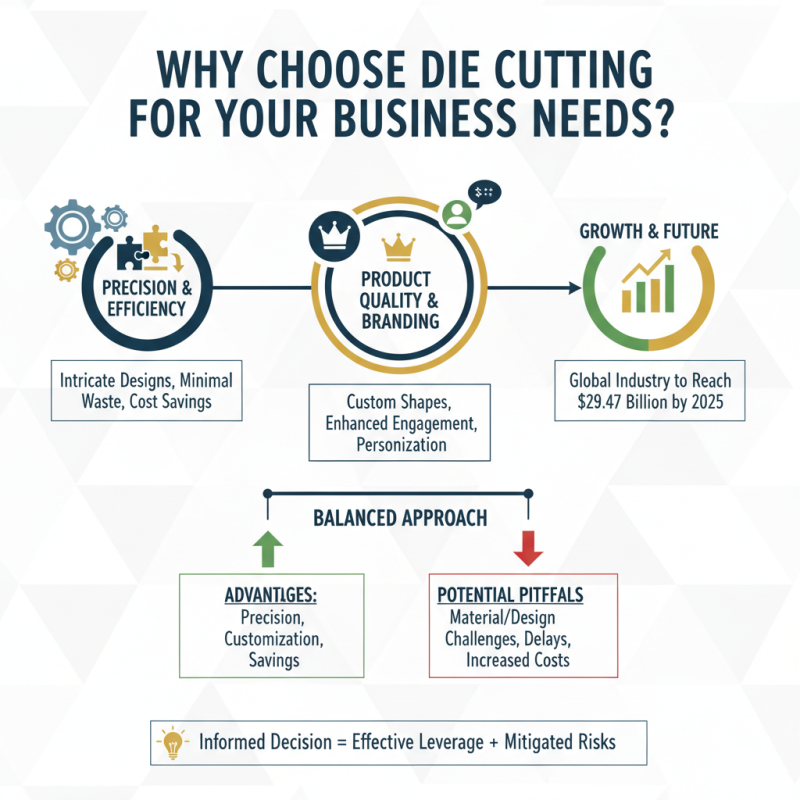
In today's competitive landscape, many businesses are turning to Die Cutting as a vital solution for their manufacturing needs. According to a recent report by Smithers Pira, the global die-cutting industry is poised to reach $29.47 billion by 2025, which underscores its growing importance. Die Cutting offers unparalleled precision, allowing businesses to create intricate designs with minimal waste. This efficiency can lead to significant cost savings.
Incorporating Die Cutting can elevate product quality. Custom shapes and designs enhance branding and customer engagement. Moreover, with consumers increasingly favoring personalized products, Die Cutting provides an avenue for customization that can set businesses apart. However, relying solely on Die Cutting without careful consideration of material and design can lead to challenges, such as production delays or increased costs.
Ultimately, the decision to adopt Die Cutting should be rooted in a thorough understanding of both its advantages and potential pitfalls. This balanced approach can help businesses leverage Die Cutting effectively while mitigating risks.
Benefits of Die Cutting for Material Efficiency
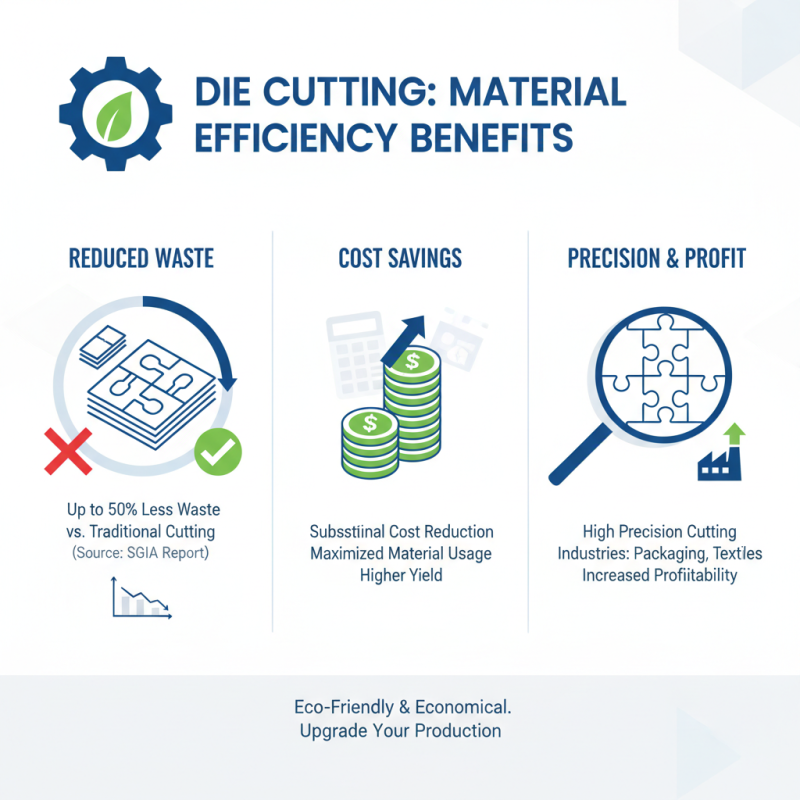
Die cutting is increasingly recognized for its remarkable material efficiency. According to a report from the Specialty Graphics Imaging Association, die cutting can reduce waste by up to 50% compared to traditional cutting methods. This reduction not only benefits the environment, but also leads to substantial cost savings. Businesses in packaging and textile industries often report that using die cutting enables them to maintain high precision while maximizing material usage.
When considering die cutting, it’s essential to analyze the materials involved. Some materials are better suited for die cutting, leading to less scrap. For instance, flexible materials like foam and various paper types perform exceptionally well. The ability to die cut complex shapes means businesses can create intricate designs that are both functional and visually appealing.
Tips: Invest in quality dies to enhance longevity. Evaluate your production volume to determine the most efficient setups. Including multiple designs on a single die can significantly reduce costs, allowing for versatility without sacrificing quality. While die cutting offers many advantages, it's crucial to continually assess and refine your processes. Aim for sustainability, but remain open to evolving technology.
Customization Options Available with Die Cutting Techniques
Die cutting offers a unique way to achieve custom designs for various business needs. This technique allows for precision and creativity, making it easier to craft products that stand out. With die cutting, you can create intricate shapes and varying sizes to match your brand's vision.
Customization options are vast. You can use different materials, including paper, plastic, and metal. This increases flexibility to produce everything from packaging to promotional items. Experimenting with textures and finishes can elevate your design. For instance, consider embossed effects for a tactile experience.
Tip: Always prototype your design before full production. This helps identify any adjustments needed early on.
Another advantage is the ability to create limited editions. Small runs can increase customer engagement and offer a personal touch. Don’t be afraid to incorporate feedback from your audience. It's an opportunity for growth.
Tip: Gather insights from your team's experience and customer preferences. This can improve your die-cut designs significantly.
In the end, die cutting enhances not just aesthetics, but functionality as well. Keep an open mind and explore different styles. Experimentation is key to discovering what works best for your brand’s goals.
Cost-Effectiveness of Die Cutting in Production Processes
Die cutting has emerged as a popular technique for various business needs, particularly due to its cost-effectiveness in production processes. This method allows for precise shapes and uniformity across large volumes, helping businesses save on material waste. By utilizing die cutting, companies can achieve high-quality products without incurring excessive costs. It offers flexibility in design, catering to various industries like packaging and textiles.
When considering die cutting, it’s essential to evaluate your production scale. Higher volumes generally lead to greater savings. Additionally, understand the materials you plan to use. Some materials may require specialized dies, which can increase initial costs.
Tip: Always seek a reliable partner with die cutting experience. They can provide insights into material compatibility and design optimization.
Another consideration is machinery costs. Investing in a high-quality die cutting machine can pay off in the long run. Look into both manual and automatic options based on your business needs.
Tip: Analyze your workflow to determine if automation can reduce labor costs. This can significantly enhance efficiency and output quality.
Ultimately, weighing the pros and cons of die cutting is essential. Focus on maintaining quality while keeping costs in check.
Applications of Die Cutting in Various Industries
Die cutting is a versatile technique used across many industries. In packaging, it creates custom shapes that enhance product presentation. This customization can elevate a brand's appeal. Using die cutting, companies can make intricate boxes or inserts, allowing for better product protection.
In the textile industry, die cutting is employed to produce unique fabric shapes. This process helps in creating intricate designs with precision. It allows designers to experiment without excessive material waste. In the automotive sector, die cutting is critical for producing gaskets and seals. These components ensure optimal performance and durability, showcasing the method's importance in manufacturing requirements.
Healthcare also benefits from die cutting. Medical applications often require precise components, such as labels and protective covers. Here, accuracy is paramount. However, not all designs translate well. Businesses must iterate and refine their designs to achieve optimal results. The learning curve can be steep but greatly rewarding.
Why Choose Die Cutting for Your Business Needs? - Applications of Die Cutting in Various Industries
| Industry |
Application |
Materials Used |
Benefits |
| Packaging |
Boxes, Labels, and Inserts |
Cardboard, Paper, Plastic |
Cost-effective, Customizable, Efficient |
| Automotive |
Gaskets and Insulation Components |
Foams, Rubbers, Plastics |
Precision Cuts, High Tolerance |
| Textiles |
Cutting Fabric Patterns |
Cotton, Polyester, Leather |
Speed, Accuracy, Less Waste |
| Electronics |
Custom Shields and Plates |
Copper, Aluminum, Plastic |
Durability, Lightweight |
| Healthcare |
Medical Packaging and Devices |
Plastic, Paper, Foam |
Sterile, Safe, Customized Sizes |
Choosing the Right Die Cutting Method for Your Business Needs
Choosing the right die cutting method is crucial for various industries. Different businesses have unique requirements. For instance, packaging companies often seek precision and efficiency. According to a report by Smithers Pira, the global die cutting market is projected to reach $25 billion by 2026, reflecting significant growth.
Flexibility is key when selecting a die cutting method. Whether using flatbed, rotary, or laser die cutting, each has its pros and cons. Flatbed die cutting offers versatility. It's great for high-volume production of numerous designs. However, it's typically slower than rotary cutting. Rotary die cutting is efficient for long runs but may limit design options.
A business should assess its production goals and cost structures. For example, a startup may prioritize cost over speed, while an established company might seek rapid production. Data from industry studies reveals that over 70% of businesses value customization. This highlights the need for flexibility in die cutting methods. The right choice can drastically impact productivity and profitability. Reflect on these needs before making a decision.